

Spring storm season in Lake Ozark, MO does not arrive with much warning. Heavy rain, hail, and high winds can move through the area within hours, and the roofs that fail first are almost always the ones that were already showing signs of damage long before the first storm cell formed.
The problem is that most homeowners do not inspect their roof until water is already dripping through the ceiling. By then, what started as a minor repair has often turned into a roof leak, a damaged deck, or a full section replacement.
This guide covers the seven warning signs that tell Lake Ozark homeowners a roof repair is overdue, what each sign actually means structurally, and when repair is enough versus when replacement is the smarter call.
Why Missouri Storm Season Is the Worst Time to Have a Damaged Roof
Missouri sits in a corridor that sees an average of 45 to 55 inches of rainfall annually, with the bulk concentrated in spring and early summer. Lake Ozark homeowners also deal with hail, sustained high winds, and rapid temperature swings that accelerate shingle wear beyond what most people expect.
A roof that is already compromised going into storm season does not just leak during a storm. It can fail structurally under the combined weight of water, wind uplift, and debris impact, turning a manageable repair into an emergency job that costs several times more.
The most important thing a Lake Ozark homeowner can do before storm season is schedule a professional roof inspection to identify vulnerabilities before severe weather turns them into expensive emergencies.
7 Warning Signs Your Roof Needs Repair Before Storm Season
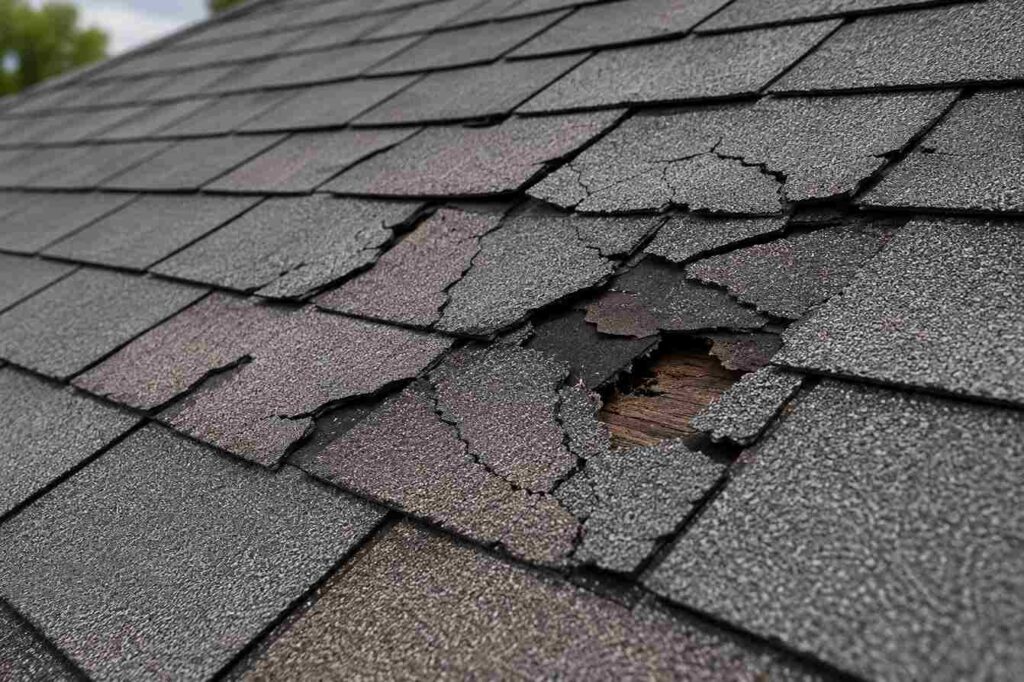
1. Missing or Damaged Shingles
Missing shingles are the most visible warning sign and one of the most serious. When a shingle lifts or blows off, it exposes the underlayment beneath to direct moisture, UV radiation, and wind uplift. One missing shingle in the wrong location can allow water to travel several feet along the roof deck before appearing as a ceiling stain inside the home.
In Lake Ozark, missing shingles are most commonly caused by aging seal strips that have failed over time, previous storm events that lifted shingle edges without fully removing them, or improper installation on an earlier repair. Any missing shingle should be addressed before storm season, not after.
2. Curling, Cupping, or Buckling Shingles
Shingles that are curling upward at the edges, cupping downward at the center, or buckling in the middle are not just cosmetic issues. These are signs of shingle deterioration that leave the roof surface uneven and far more vulnerable to wind uplift during a storm.
Missouri’s freeze-thaw cycles accelerate curling by forcing moisture repeatedly through the shingle layers during winter. By the time spring arrives, shingles that have been through several harsh winters are often already compromised, and a single hailstorm or high-wind event is enough to finish them off.
3. Granules Collecting in Gutters
Asphalt shingles are coated with granules that protect the underlying asphalt layer from UV radiation and moisture. When those granules begin washing off in significant quantities, the protective coating is failing, and the shingle lifespan is measured in months, not years.
The easiest place to spot this is in the gutters. Dark, sand-like granules collecting in the gutter channels or washing out through downspouts after rain are a reliable indicator of shingle granule loss that requires a professional assessment before storm season arrives.
4. Damaged or Lifted Flashing
Flashing is the thin metal sealing installed around chimneys, skylights, vents, and roof valleys. It is one of the most critical components of a weathertight roof and one of the most frequently overlooked during routine maintenance.
When flashing rusts, lifts, or pulls away from its seal, it creates a direct point of water intrusion that bypasses the shingles entirely. Damaged flashing is responsible for a significant percentage of roof leaks that homeowners attribute to shingle damage. It is also one of the repair types most likely to be missed during a basic visual inspection from the ground.
5. Sagging Roof Sections
A sagging roof is a structural warning sign, not just a surface issue. Sagging typically indicates one of three problems: moisture has rotted through the roof decking, the structural rafters or supports beneath have been compromised, or prolonged water retention has weakened the framing over time.
In Lake Ozark, sagging is most commonly found on north-facing roof sections that retain moisture longer due to reduced sun exposure, or on older homes where the original decking was never replaced during a previous shingle overlay.
A sagging roof section entering storm season is a serious structural risk. If high winds create uplift pressure against an already-weakened section, the result can be partial or complete roof failure during the storm. This is one of the situations where emergency roof repair becomes necessary rather than optional.
6. Water Stains on Ceilings or Walls
Yellow, brown, or transparent staining on interior ceilings or upper walls is visible evidence that water has already entered the roof system. The stain itself is rarely located directly above the entry point, as water travels along rafters and decking before finding somewhere to pool.
A ceiling stain that appears after rain is not a minor cosmetic issue. It means moisture has already worked through the roofing layers, possibly through the insulation, and is now reaching interior finishes. Left unrepaired heading into storm season, that entry point will grow with every subsequent storm.
7. Moss or Algae Growth on the Roof Surface
Moss and algae growth on a roof surface is a moisture problem, not just an appearance problem. Moss retains water against the shingle surface, lifting shingle edges and allowing moisture to penetrate the layers beneath. Over time, it accelerates shingle granule loss and can lead to rot in the underlying deck if left untreated.
Lake Ozark’s humidity and tree canopy coverage create ideal conditions for moss and algae growth, particularly on north-facing and shaded roof sections. Heading into storm season with significant moss coverage means entering with shingles that are already being lifted, weakened, and kept damp by organic growth.
Roof Repair vs Roof Replacement: How to Know Which One You Need
Not every warning sign means a full roof replacement. Here is a straightforward comparison to help Lake Ozark homeowners understand when repair is the right call and when replacement makes more financial sense:
| Repair Is the Right Call | Replacement Is the Smarter Choice |
| One or two missing shingles | Missing shingles across multiple sections |
| Isolated flashing failure | Widespread flashing deterioration |
| Single leak with identifiable source | Multiple leaks with no clear source |
| Roof under 15 years old | Roof 20 or more years old |
| Damage limited to surface layer | Decking or structural damage present |
| First repair on an otherwise sound roof | Repeated repairs on the same sections |
What Missouri Storm Season Does to an Already-Damaged Roof
Understanding how storm conditions interact with existing damage helps Lake Ozark homeowners grasp why pre-season repairs are so much more cost-effective than post-storm emergency calls:
- High winds create uplift pressure that finds and exploits every loose shingle edge, lifted flashing seal, and unsecured ridge cap.
- Heavy rain forces water through every crack, gap, and compromised seal, finding every entry point that existing damage has created.
- Hail accelerates granule loss on already-aging shingles and can crack or fracture shingles that are already brittle from UV exposure.
- Fallen branches and debris impact with far more force on a roof section that is already structurally compromised.
Does Homeowners Insurance Cover Roof Repair in Lake Ozark?
Most standard homeowners insurance policies in Missouri cover storm-damage roof repair when the damage is caused by a covered event, typically hail, wind, or fallen debris. What they do not cover is damage resulting from neglect or lack of maintenance.
This distinction matters. If an adjuster determines that pre-existing damage contributed to the failure, the claim can be partially or fully denied. A pre-storm roof inspection in Lake Ozark creates a documented record of the roof’s condition before storm season, which strengthens any claim filed after a storm event.
Roof Lux assists homeowners with roof damage insurance claims, providing detailed inspection documentation and on-site support when insurance adjusters conduct their review.
Pre-Storm Season Roof Checklist for Lake Ozark Homeowners
Before storm season arrives, Lake Ozark homeowners should verify the following:
- Inspect the roof from the ground using binoculars for missing, curling, or discolored shingles
- Check gutters after rain for granule accumulation in the channels or at downspout exits
- Look for moss or algae streaking on the north-facing or shaded sections of the roof
- Check interior ceilings and attic spaces for any signs of water staining or active moisture
- Schedule a professional roof inspection to catch what ground-level checks cannot
- Address any identified repairs before the first severe storm of the season
Frequently Asked Questions
How often should Lake Ozark homeowners get a roof inspection?
At minimum, once a year. For Lake Ozark properties, spring is the most important timing, before storm season begins. Homes that have experienced recent storm activity or are over 15 years old benefit from twice-yearly inspections.
Can I repair my own roof before storm season?
Minor debris clearing and gutter cleaning can be handled safely. Anything involving getting on the roof surface, replacing shingles, or resealing flashing should be handled by a licensed professional. Improper repairs can void manufacturer warranties and create new entry points for water.
How much does roof repair cost in Lake Ozark, MO?
Repair costs vary by scope and material. Minor shingle replacement or flashing repair typically costs less than a full section repair or structural work. The most accurate way to determine cost is a free, no-obligation inspection from a licensed Lake Ozark roofing contractor.
What happens if I ignore roof damage before storm season?
Existing damage acts as an entry point and structural weak point during storm conditions. Wind uplift, water intrusion, and debris impact all cause significantly more damage to an already-compromised roof than to a sound one. Small repairs before storm season consistently cost less than emergency repairs after.
Does Roof Lux offer free pre-storm inspections in Lake Ozark?
Yes. Roof Lux provides free, no-obligation roof inspections throughout Lake Ozark and nearby communities. Contact our team at (573) 693-1050 to schedule before storm season arrives.
Conclusion
The seven warning signs covered above are not just cosmetic issues. Each one represents a structural vulnerability that Missouri’s storm season will find and exploit. The difference between a manageable repair and an emergency replacement is almost always timing.
Lake Ozark homeowners who identify and address roof damage before storm season consistently pay less, avoid interior damage, and maintain stronger insurance claim positions than those who wait until after a storm to find out what their roof was hiding.
If your roof is showing any of these signs, the smartest next step is a free inspection from Roof Lux. Our team serves Lake Ozark and nearby communities with honest assessments, no pressure, and repairs completed to manufacturer standards.