

After last spring’s storm rolled through the Lake of the Ozarks, a lot of homeowners started noticing things they hadn’t paid attention to before: a water stain on the ceiling, granules sitting in the gutters, a shingle that looked just slightly off. It’s easy to ignore until you can’t.
Here’s the straight answer: most Missouri roofs last between 15 and 30 years, depending on material. But local conditions around the Lake of the Ozarks the humidity, the storm seasons, the dense tree canopy can shorten that window significantly without proper care.
Roof Lux has been serving homeowners across Lake Ozark, Osage Beach, Camdenton, Sunrise Beach, and Lebanon for over 10 years. This guide covers lifespan by roofing material, how Missouri’s climate affects your roof specifically, warning signs to watch for, and what you can do to protect your investment.
Average Roof Lifespan in Missouri by Material
Asphalt Shingles (15–20 years): The most common roofing material in Missouri. Affordable and easy to install, but they take the hardest beating from Missouri’s summer heat and hail. Without regular roof maintenance, expect them closer to 15 years in this climate.
Architectural / Dimensional Shingles (25–30 years): A step up from standard asphalt in both durability and wind resistance. A solid middle-ground for most residential roofing in the Lake Ozark area, offering better performance without the cost of metal.
Metal Roofing (40–60 years): The longest-lasting practical option for Missouri homes and increasingly popular in the Ozarks. Metal roof lifespan holds up well against moisture and storm damage, and it’s low maintenance compared to other materials.
Wood / Cedar Shake (20–30 years): Looks great on Ozark-style homes, but Missouri’s high humidity makes wood shake one of the most maintenance-intensive options. Moss and wood rot are constant concerns without proper treatment.
Clay or Concrete Tile (50+ years): Rare in Missouri but worth knowing. Extremely durable and nearly weather-proof, though the upfront cost and structural requirements make it a limited choice for most homeowners.
Quick Comparison by Material
| Roofing Material | Avg. Lifespan (MO) | Best For | Maintenance |
| Asphalt Shingles | 15–20 years | Budget-conscious homes | Medium |
| Architectural Shingles | 25–30 years | Most residential homes | Low–Medium |
| Metal Roofing | 40–60 years | Residential & commercial | Low |
| Wood / Cedar Shake | 20–30 years | Rustic / luxury homes | High |
| Clay / Concrete Tile | 50+ years | High-end custom homes | Low |
How Missouri’s Climate Shortens Roof Life Around Lake of the Ozarks
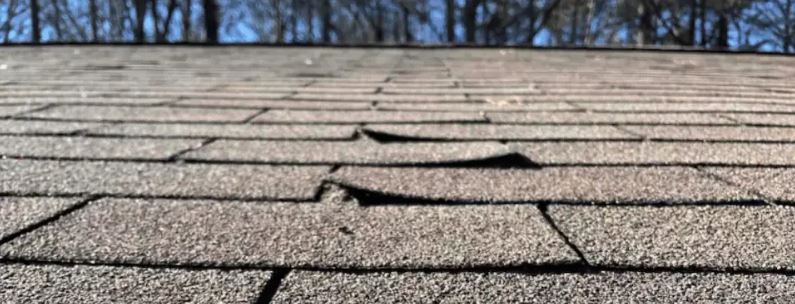
Missouri’s weather doesn’t just wear on a roof; it attacks it from multiple angles across all four seasons. For homeowners around the Lake of the Ozarks, a few specific factors make roof deterioration happen faster than the state average.
- Spring storm season (April–June): Severe convective storms bring high winds and hail that can strip granules, crack shingles, and expose underlayment. One bad hail damage roof event can take years off an otherwise healthy asphalt roof. Storm damage roof repair should happen quickly; delays turn small problems into major ones.
- Lake humidity: Proximity to Lake of the Ozarks means elevated moisture year-round. North-facing roof slopes stay damp longer, creating ideal conditions for moss, algae, and wood rot, especially on asphalt shingle and cedar shake roofs.
- Ozarks tree canopy: The dense tree cover around lake-area neighborhoods means constant debris on the roof. Shaded, debris-covered sections stay wet far longer, and moss establishes faster than most homeowners realize.
- Summer UV and heat: Missouri summers are relentless. UV rays degrade asphalt shingle granules faster than in cooler climates, accelerating roof deterioration and shortening asphalt shingle roof lifespan toward the lower end of its range.
- Freeze-thaw cycles: Winter in Missouri brings repeated freeze-thaw cycles. Water that seeps into a small crack expands when it freezes, widening that crack and eventually damaging roof flashing and shingles from the inside out.
If your roof has made it through a Missouri spring, a professional roof inspection at the start of each summer is one of the smartest maintenance moves you can make.
5 Signs Your Missouri Roof Is Near the End of Its Life
Knowing the signs you need a new roof can save you from an emergency replacement and the water damage that comes with it. Watch for these:
- Granules collecting in your gutters. When asphalt shingles start shedding their granules, the protective layer against UV is gone. This is one of the first visible roof replacement signs and shouldn’t be ignored.
- Curling or cupping shingles. Shingles that curl upward at the edges or cup in the middle are telling you they’ve absorbed too much moisture or heat. This kind of roof damage accelerates rapidly in Missouri summers.
- Multiple leaks in different areas. A single leaking roof spot is usually a roof repair job. But if you’re finding three or more separate leak points, that’s a sign of widespread deterioration and a replacement conversation.
- Sagging roof deck or soft spots. Press carefully along the roofline or in the attic. Any sagging, sponginess, or visible dip in the deck is a structural issue that requires immediate replacement, not patching.
- Your roof is over 20 years old. Even if it looks okay from the ground, a Missouri roof past 20 years is working on borrowed time. At that age, even minor wind damage or a moderate storm can push it into replacement territory.
If two or more of these apply to your roof right now, don’t wait until next season. Call a local roofing company for an inspection before the problem escalates.
Repair or Replace? How to Make the Right Call
This is the question every Missouri homeowner eventually faces, and the answer usually comes down to three factors:
- The 30–40% rule: If the cost to repair roof damage exceeds 30–40% of what a full roof replacement would cost, replacement is the smarter long-term investment. You’re paying most of the cost anyway without the benefit of a fresh start.
- Age threshold: Any Missouri roof past 20 years is a replacement candidate, even for moderate damage. Patching an old roof buys time but rarely solves the underlying deterioration.
- Insurance coverage: Storm and hail damage roof situations are often covered by homeowners’ insurance, sometimes covering the full cost of a residential roof replacement. Roof Lux works directly with insurance companies to manage roof damage insurance claims from start to finish, making the process as straightforward as possible for homeowners.
When in doubt, a professional roof inspection from a qualified Missouri roofing contractor will give you a clear, unbiased picture of exactly where your roof stands.
How to Extend Your Roof’s Lifespan in Missouri
The difference between a roof that makes it 15 years and one that pushes 25 is usually consistent maintenance. Here’s what actually moves the needle:
- Schedule annual roof inspections: Especially in the Lake Ozark area, a post-storm inspection in early summer catches damage early before it becomes a roof leak repair emergency. Roof Lux offers professional roof inspections across all five service areas.
- Keep gutters clean and clear: Clogged gutters force water to back up under shingles, accelerating roof deterioration from the edges inward. Gutter maintenance is one of the simplest ways to protect your roof. Roof Lux offers both rain gutter cleaning and seamless gutter installation to keep drainage where it belongs.
- Trim overhanging branches before storm season: Branches that hang over the roofline drop debris, hold moisture, and become projectiles in high winds. Trim them back each spring before storm damage season starts.
- Address moss and algae early: In the shaded, humid neighborhoods around Lake of the Ozarks, moss can take hold faster than expected. Once established, it holds moisture and damages shingles from underneath. Roof Lux has a dedicated guide on safe moss removal for Lake Ozark homeowners.
- Use a GAF-certified contractor for repairs: Workmanship quality directly affects how long a roof lasts. Roof Lux is a proud GAF roofing contractor, meaning every repair and replacement meets the manufacturer’s standards and comes with access to roof warranties that protect your investment long-term.
Frequently Asked Questions
How long does a roof last in Missouri?
Most Missouri roofs last between 15 and 30 years depending on the material. Asphalt shingles typically reach 15–20 years, architectural shingles 25–30 years, and metal roofing 40–60 years. Factors like humidity around Lake of the Ozarks, spring storm seasons, and maintenance quality all affect where your roof lands within those ranges.
What roofing material lasts longest in Missouri?
Metal roofing lasts the longest in Missouri, typically 40 to 60 years, and performs best against the state’s combination of heat, humidity, and severe storms. Clay and concrete tile can last 50+ years but are far less common due to cost and structural requirements.
How do I know if I need a roof replacement or just a repair?
A single isolated leak or a few missing shingles is usually a repair. But if your roof is over 20 years old, has multiple leaks, widespread shingle damage, or a sagging deck, replacement is the better call. As a general rule, if repair costs exceed 30–40% of the replacement cost, replace.
Does storm damage affect how long a roof lasts?
Yes significantly. A single severe hail or wind event can strip granule protection, crack shingles, and expose underlayment, cutting years off a roof’s remaining life. Getting a professional inspection after any major storm is the best way to assess the impact before it turns into a bigger problem.
How often should I have my roof inspected in Missouri?
At minimum, once a year, ideally in late spring after storm season. Roof Lux recommends inspections for any Lake Ozark area homeowner after significant hail or wind events as well, since damage isn’t always visible from the ground.
Missouri roofs face real pressure from spring storms and summer heat to lake humidity and winter freeze-thaw cycles. Knowing your material’s expected lifespan, watching for the early warning signs, and staying ahead of maintenance is what separates a roof that makes it 25 years from one that fails at 15.
Roof Lux is a GAF-certified roofing contractor with over 10 years serving Lake Ozark, Osage Beach, Camdenton, Sunrise Beach, and Lebanon. Whether you need a professional roof inspection, a repair quote, or a full replacement estimate, the team is ready to help.